Midas Microbes
Research Project (in progress) at RCA Design Interactions, 2010–2011.
This project tries to imagine how our collective and personal relationships to the material gold will change in the possible near-future shaped by resource-scarcity. What if biological technologies to concentrate gold aren’t just used for mining but in the personal space, perhaps to “grow” wedding rings on people’s skins?
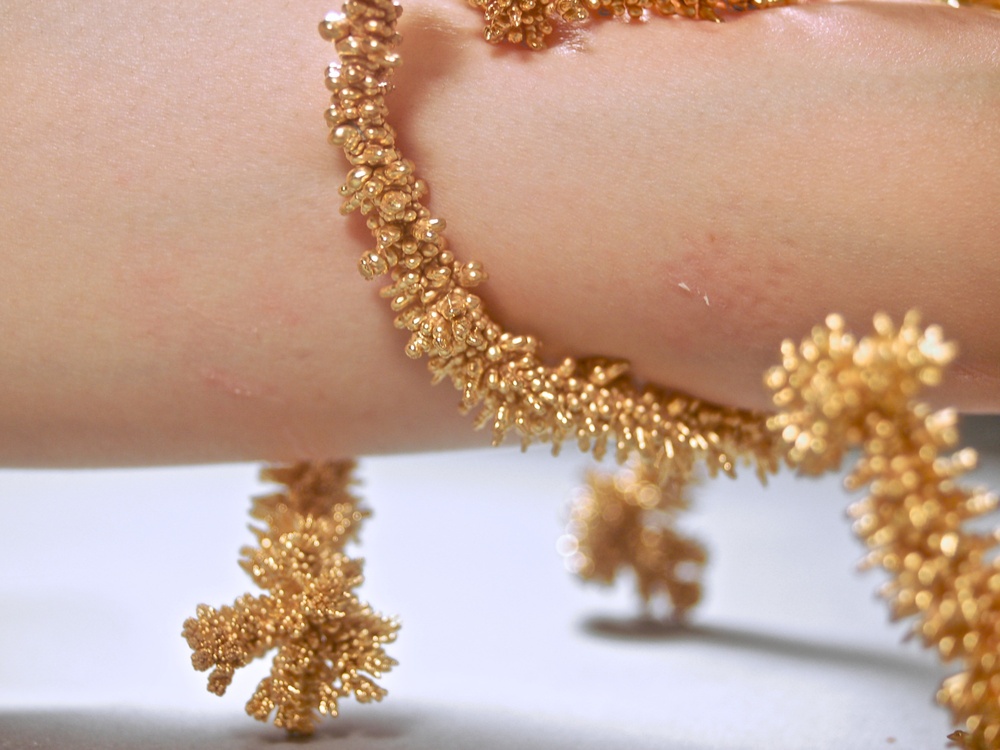
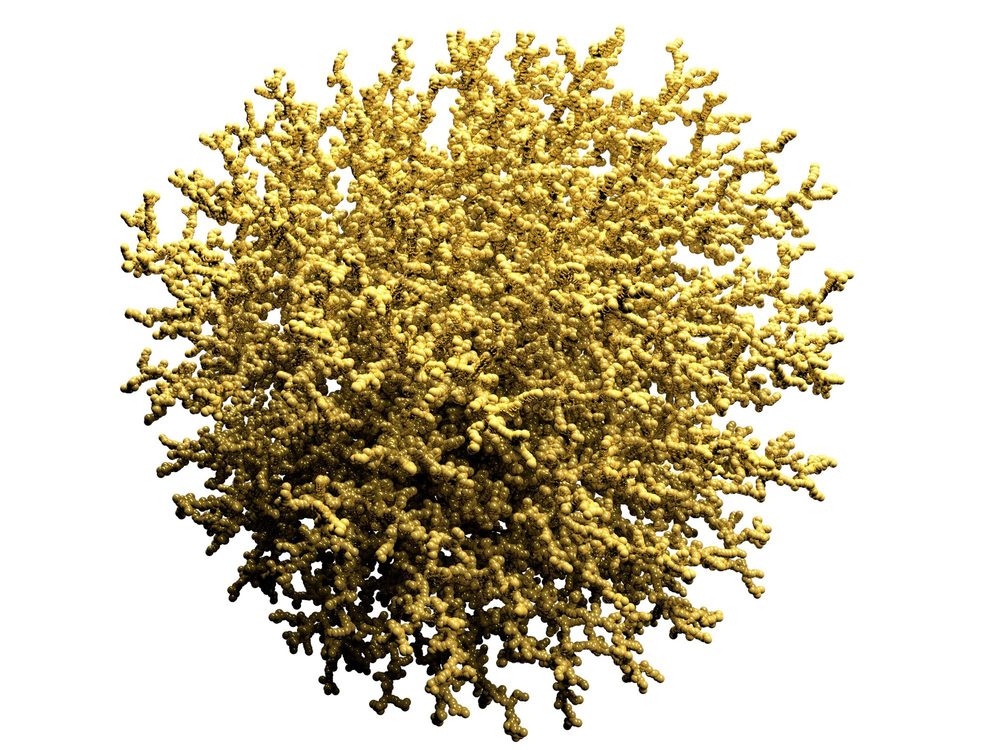
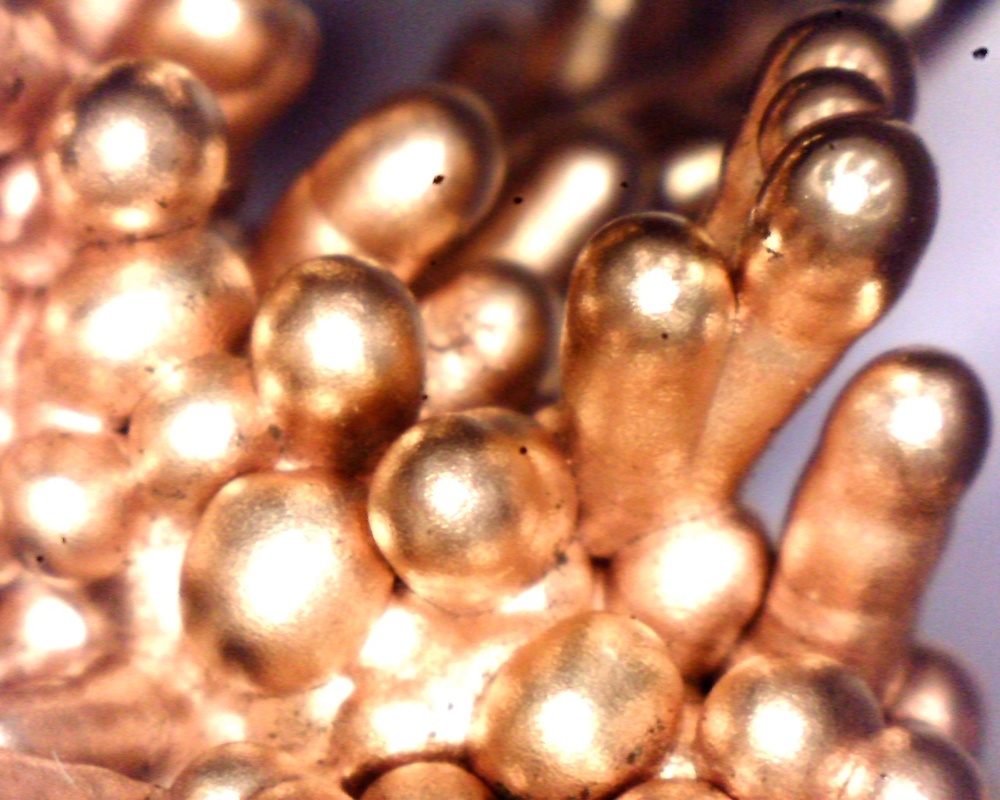
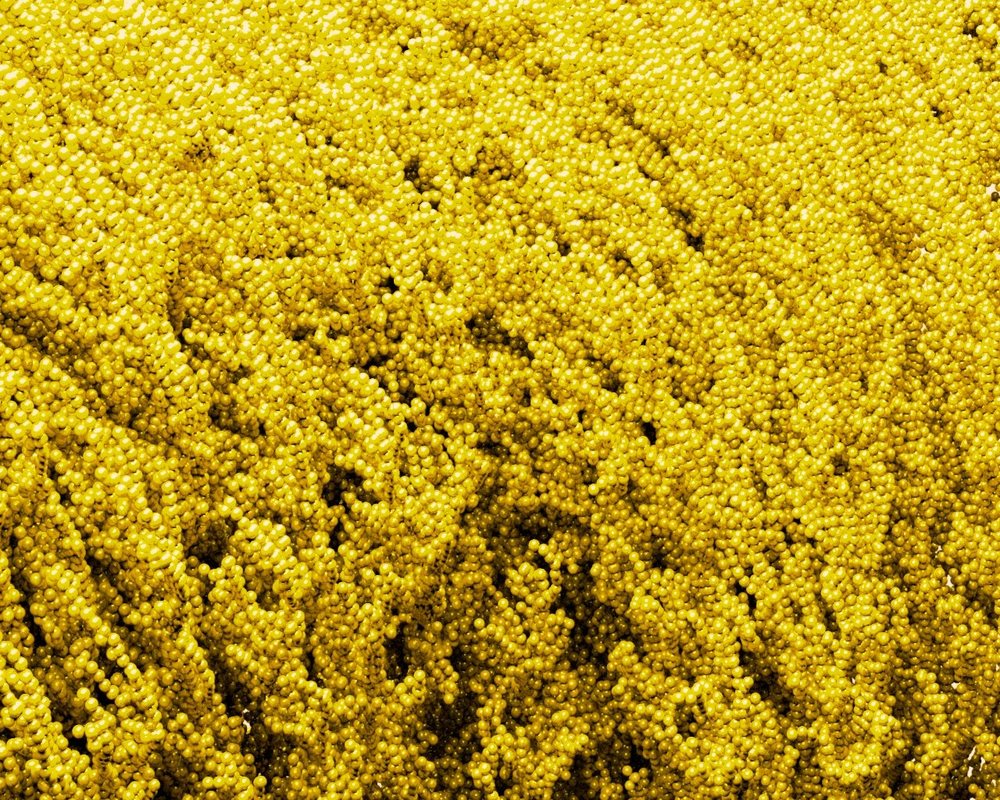
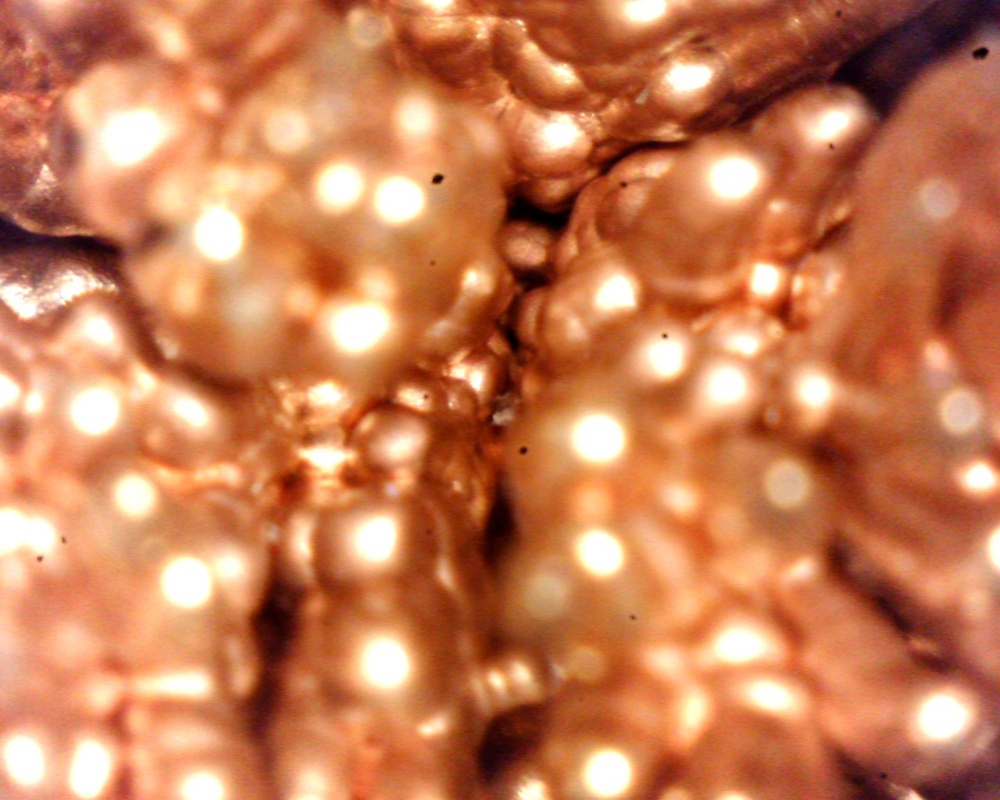
At this stage of this work in progress, I created some computer visualisations using models driven by diffusion-limited aggregation simulation algorithms to explore the aesthetics of “gold that grows”. Additionally I used electrodeposition equipment to generate physical approximations of metallic objects that might be grown by microbes residing on human skin.
##Background
We’re using up our planet’s natural resources in an astonishing pace. Peak Oil is in the near future; Peak Phosphorus and Peak Gold may already have happened. But these resources are not disappearing off the face of the earth, they are just being diluted to the point of not being recognisable or usable.
Scientists and mining companies around the world are working on solutions to this problem. One of the most promising current avenues to gathering very diluted precious materials involves using large swarms of microbes to process and recover minerals. Naturally occurring bacteria such Cupriavidus metallidurans (arguably responsible for creating some of the world’s largest gold deposits) can be isolated and developed using directed evolution techniques. Other approaches include genetically altering different microbes to increase their mineral processing capabilities. Once this kind of technology becomes readily available and moves outside of labs, factories and mines, these bacteria might be used for recreational purposes. Whole new subcultures with associated services and products might develop around the constraints and aesthetics of biologically aggregated gold. The goal of this project will be to portray these possibilities and connect them to contemporary (sub-)culture.